
 By
By 

New China-Africa Report Signals Shift in Lending and Trade Relations
A new report released by the African Economic Research Consortium in collaboration with the Boston University Global Development Policy Center has revealed major shifts in China’s economic engagement with Africa, highlighting changing trends in trade, investment, and development finance.
The 2026 China–Africa Economic Bulletin shows that while trade between the two regions continues to grow, Chinese lending to African countries has entered a new phase marked by lower loan commitments and rising debt repayments.
Africa-China Trade Reaches Record High
According to the report, bilateral trade between Africa and China reached a record $275 billion in 2024, reinforcing China’s position as one of Africa’s most important economic partners.
China accounted for 28 percent of Africa’s total imports and 16 percent of exports, while also emerging as the leading export destination for 19 African countries.
However, the report notes that Africa’s exports to China remain heavily concentrated in extractive industries. Between 87 and 91 percent of exports consisted of commodities such as copper, cobalt, chromium, manganese, and bauxite.
In contrast, between 94 and 95 percent of imports from China were manufactured goods, highlighting the continued imbalance in trade composition between the two regions.

New China-Africa Report Signals Shift in Lending and Trade Relations
Green Technology Exports Gain Momentum
The report also points to growing momentum in low-carbon and green technology investments.
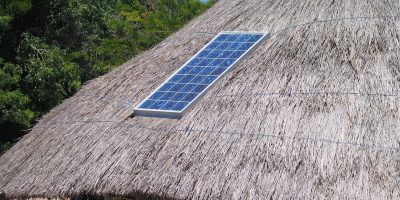
China’s exports of low-carbon technologies to Africa reached $9.8 billion in 2024, largely concentrated in power generation, energy storage, and pollution control technologies.
Most of these exports flowed into key markets including South Africa, Egypt, and Nigeria.
Researchers noted that this reflects China’s growing focus on clean energy and sustainable infrastructure across the continent.
Chinese Lending to Africa Declines
One of the report’s most significant findings is the sharp decline in Chinese lending to African countries.
Chinese loan commitments have remained below $5 billion annually since 2020, a major drop compared to the 2010s when Chinese lending exceeded that of the World Bank in several years.
The report further revealed that Africa is now repaying more to Chinese lenders than it is receiving in new financing, resulting in negative net capital flows.
Researchers warned that rising debt servicing obligations between 2026 and 2030 could place pressure on government spending, potentially affecting investments in healthcare, education, and climate transition programmes.
Notably, the report states that China has not recorded any new lending to coal, oil, or gas projects in Africa since 2019, signaling a major shift in financing priorities.
Investment Growth Concentrated in Few Markets
While Chinese foreign direct investment rebounded strongly in 2023 and 2024, the report says the recovery has largely been driven by a small number of major projects rather than broad-based growth across the continent.
North Africa accounted for nearly 70 percent of recent greenfield investments, indicating increasing concentration in select markets.
The report also highlighted China’s recent decision to extend zero-tariff treatment to all 53 African countries with diplomatic ties in 2026. However, researchers cautioned that the long-term benefits will depend on Africa’s ability to strengthen industrialization and diversify exports beyond raw materials.
The findings paint a picture of a changing China-Africa relationship, one increasingly defined by trade, green technology, and strategic investment, rather than large-scale infrastructure lending alone.

















Comments