
 By
By 

How Safaricom Is Using Technology and Sustainability to Drive Inclusive Growth
For Safaricom PLC, the future of business is increasingly being shaped by one key idea, “growth must create impact beyond profit”
Over the past 25 years, the company has steadily expanded its role from a telecommunications provider into a major driver of social transformation through education, healthcare, environmental sustainability and digital inclusion.
Today, Safaricom’s latest sustainability milestones show how technology and purpose-led investments are becoming central to Kenya’s development journey.
Building a Greener Digital Future
As demand for digital connectivity rises, Safaricom is also accelerating efforts to reduce its environmental footprint.
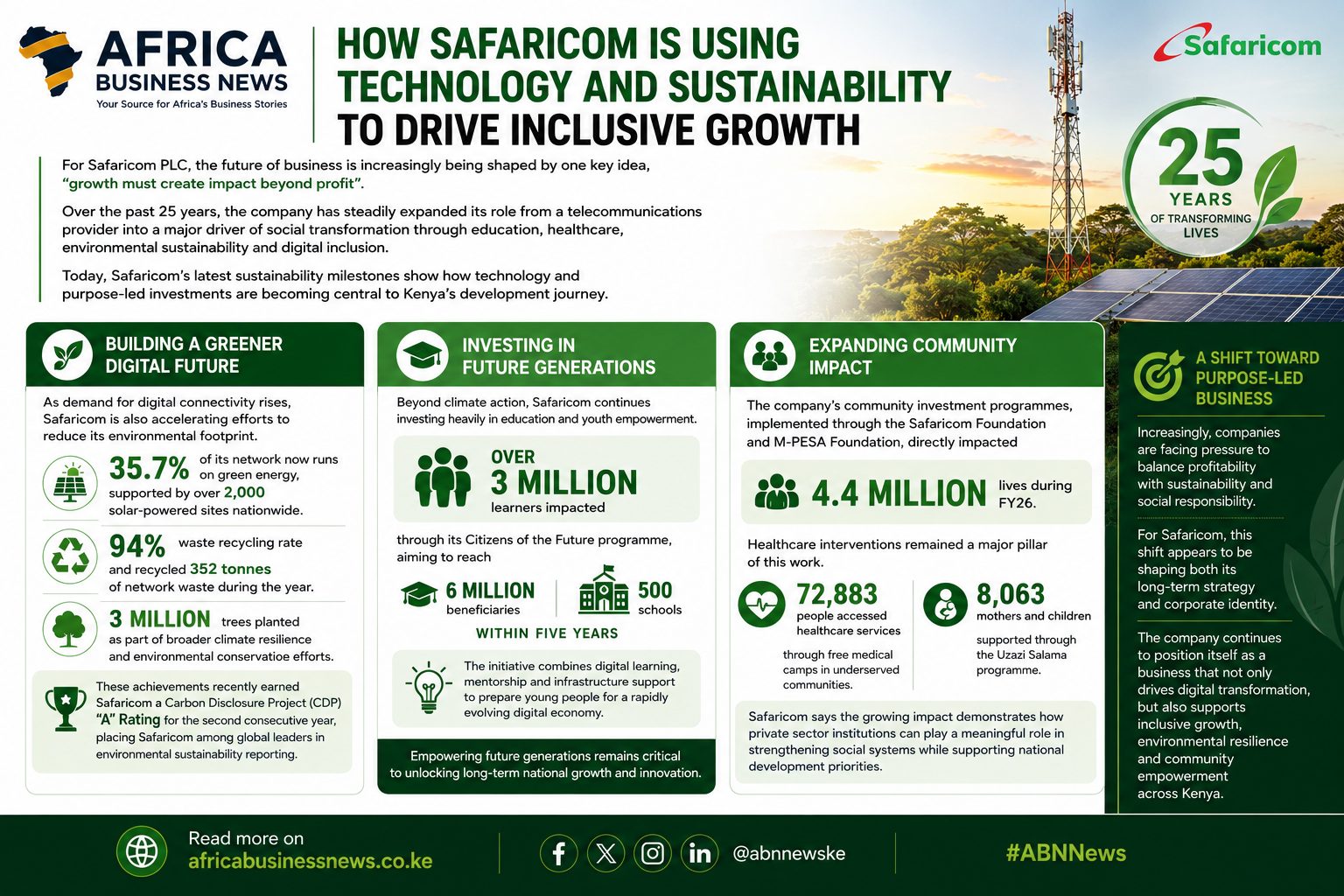
According to the company’s FY26 results, 35.7 percent of its network now runs on green energy, supported by over 2,000 solar-powered sites nationwide.
The company also reported a 94 percent waste recycling rate and recycled 352 tonnes of network waste during the financial year.
Additionally, Safaricom planted 3 million trees as part of broader climate resilience and environmental conservation efforts.
These achievements recently earned the company a Carbon Disclosure Project (CDP) “A” Rating for the second consecutive year, placing Safaricom among global leaders in environmental sustainability reporting.
How Safaricom Is Using Technology and Sustainability to Drive Inclusive Growth
Investing in Future Generations
Beyond climate action, Safaricom continues investing heavily in education and youth empowerment.
Its Citizens of the Future programme has already impacted over 3 million learners and aims to reach 6 million beneficiaries across 500 schools within five years.
The initiative combines digital learning, mentorship and infrastructure support to prepare young people for a rapidly evolving digital economy.
Safaricom says empowering future generations remains critical to unlocking long-term national growth and innovation.
Expanding Community Impact
The company’s community investment programmes, implemented through the Safaricom Foundation and M-PESA Foundation, directly impacted 4.4 million lives during FY26.
Healthcare interventions remained a major pillar of this work.
Through free medical camps, 72,883 people accessed healthcare services in underserved communities. Meanwhile, the Uzazi Salama programme supported 8,063 mothers and children through maternal healthcare initiatives.
Safaricom says the growing impact demonstrates how private sector institutions can play a meaningful role in strengthening social systems while supporting national development priorities.
A Shift Toward Purpose-Led Business
Increasingly, companies are facing pressure to balance profitability with sustainability and social responsibility.
For Safaricom, this shift appears to be shaping both its long-term strategy and corporate identity.
The company continues to position itself as a business that not only drives digital transformation, but also supports inclusive growth, environmental resilience and community empowerment across Kenya.
















Comments