
 By
By 

How NCBA Is Building a Future-Ready Banking Business Across Africa
From digital banking and SME financing to wealth management, green finance and regional expansion, NCBA is using technology and diversification to position its business for long-term growth.
The banking industry is changing rapidly. Customers want faster digital services, businesses need more flexible financing, and investors are increasingly looking for institutions that can grow while managing risk and responding to changing economic conditions.
For NCBA Group, this shift is reflected in a strategy that increasingly extends beyond traditional banking. The Group is combining digital platforms, lending, wealth management, insurance, asset finance and sustainability initiatives as it seeks to build a more diversified financial services business across Africa.
Its first-half 2026 performance provides a snapshot of this strategy in action.
NCBA reported a KES 12.4 billion profit after tax for the six months ended June 2026, representing a 12.2 per cent increase from KES 11.0 billion recorded during the same period in 2025. Operating income rose 15.1 per cent to KES 40.7 billion, while profit before tax increased 14.3 per cent to KES 15.5 billion.
Beyond the headline numbers, however, the results point to several trends shaping the bank’s long-term growth strategy.
Digital banking is becoming central to the business
One of the clearest themes in NCBA’s strategy is the growing role of technology in banking.
During the first half of 2026, the Group invested KES 2.4 billion in technology infrastructure, with a focus on accelerating artificial intelligence adoption, strengthening cyber resilience and improving its core operations.
The investment is being reflected in customer experience and service delivery. NCBA reported system uptime of 99.68 per cent, while its Digital Net Promoter Score increased to 69 per cent.
Mobile banking accounted for 94 per cent of transaction volumes, highlighting how quickly digital channels have become part of everyday financial activity.
The Group also reported KES 819 billion in digital loans disbursed during the period, a 26.9 per cent increase year-on-year.
For banks across Africa, this shift is significant. Digital channels allow financial institutions to serve customers more efficiently while creating opportunities to develop products around specific customer needs.
NCBA’s approach is increasingly built around this digital-first model.
Moving beyond traditional banking
NCBA’s digital strategy is also visible in the platforms it is developing around different areas of the economy.
The Group’s CarDuka digital marketplace sold vehicles worth KES 1.94 billion during the first half of the year, while KOMIUT, its digital transport platform, processed more than KES 117 million in collections.
The bank has also scaled NCBA ConnectPlus, a business banking platform designed to provide a more standardized digital experience across its regional markets.
Other initiatives, including BOOSTA for SMEs and EasyBuild for property finance, demonstrate how NCBA is increasingly connecting financial services to specific economic activities.
This represents a broader shift in banking: instead of customers simply accessing loans or accounts, digital platforms can bring together financing, payments, marketplaces and other services around a customer’s business or lifestyle.
SMEs remain a key growth engine
Small and medium-sized businesses are another important part of NCBA’s growth strategy.
The Group’s SME loan book increased by 12 per cent year-on-year to KES 44.7 billion, up from KES 39.9 billion.
For Kenya and other African economies, SMEs remain critical to employment, entrepreneurship and household incomes. Yet many businesses continue to face challenges accessing affordable and appropriate financing.
NCBA’s focus on this segment therefore presents an opportunity to deepen its relationship with entrepreneurs while supporting businesses at different stages of growth.
Digital tools can further simplify access to financial services, particularly for small businesses that may not have the resources or infrastructure of larger corporations.
How NCBA Is Building a Future-Ready Banking Business Across Africa
Building wealth beyond the bank account
NCBA is also expanding its presence in wealth management as customers increasingly seek solutions beyond traditional savings and lending.
The Group’s wealth Assets Under Management reached KES 101 billion, with more than 60,000 active wealth clients.
The growth reflects an increasingly diversified financial-services model in which customers can access investment and wealth-building solutions alongside conventional banking.
Insurance is another part of this diversification. NCBA reported Gross Written Premiums of KES 2.1 billion for NCBA Insurance and KES 2.3 billion for Bancassurance.
For customers, the combination of banking, insurance, investment and wealth-management services creates an opportunity to manage more aspects of their financial lives through one broader ecosystem.
For NCBA, it provides multiple avenues for sustainable revenue growth.
Financing the shift to a greener economy
Sustainability is also becoming increasingly integrated into NCBA’s business strategy.
Through its Change The Story sustainability agenda, the Group has expanded its focus on green financing, including the oversubscribed KES 3 billion Kenya Mortgage Refinance Company bond, electric vehicle financing and solar leasing.
NCBA has also established strategic partnerships in asset finance aimed at accelerating electric vehicle adoption and solar leasing, contributing to a reported 30 per cent asset finance market share in Kenya.
This creates an intersection between sustainability and commercial opportunity.
As businesses and consumers look for cleaner transport and more efficient energy solutions, financial institutions have a role to play in making these technologies more accessible through financing.
The bank also reported that more than 340,000 trees were nurtured and planted, while community initiatives have impacted more than 400,000 livelihoods.
Regional expansion provides another growth avenue
NCBA’s growth strategy extends beyond Kenya.
Its banking operations in Uganda, Tanzania and Rwanda recorded combined profitability of KES 1.6 billion, supported by 25 per cent year-on-year lending growth and an 11 per cent increase in income.
The Group’s non-banking businesses including NCBA Investment Bank, Leasing, Bancassurance and NCBA Insurance collectively generated KES 1.1 billion in profitability, representing 40 per cent growth year-on-year.
This diversification gives NCBA multiple sources of growth while reducing reliance on a single business line or market.
The proposed Nedbank transaction could further reshape the Group’s regional growth ambitions, although completion remains subject to the fulfilment of outstanding conditions and regulatory approvals.
Managing growth while preparing for risks
The growth comes against a challenging economic backdrop.
NCBA increased its provision for credit losses to KES 5.2 billion, compared with KES 3.2 billion during the same period in 2025.
At the same time, the Group reported a non-performing loan ratio of 10.5 per cent, compared with a reported Kenyan market level of 15.3 per cent.
The bank’s return on average equity stood at 19.0 per cent, while capital adequacy was reported at 21.7 per cent.
The figures highlight the balancing act facing financial institutions: maintaining growth while ensuring sufficient buffers to absorb potential risks.
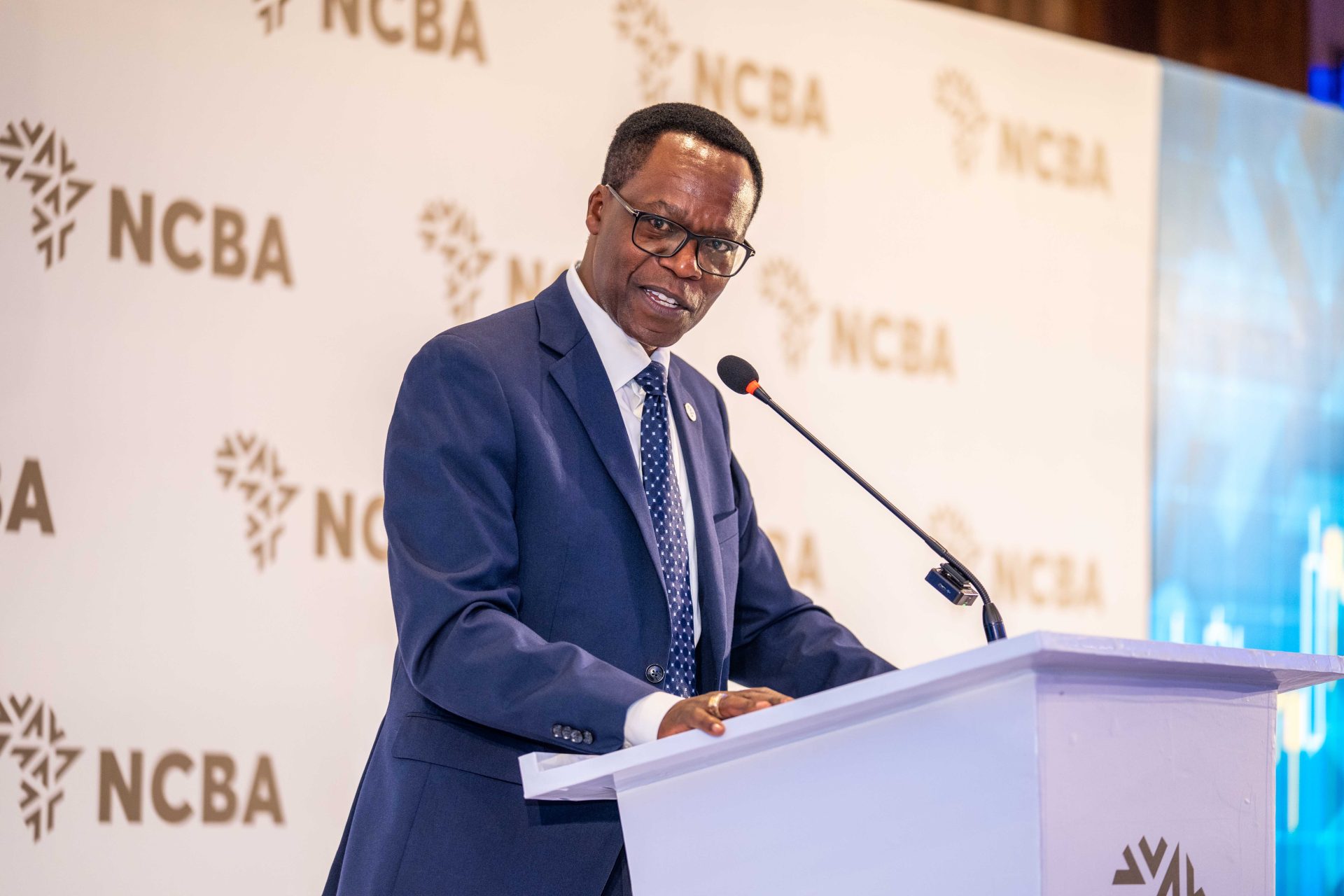
NCBA Group Managing Director John Gachora said the bank’s strategy had focused on disciplined growth and maintaining a strong balance sheet in a dynamic operating environment.
What the next phase of banking could look like
NCBA’s first-half performance points to a banking model increasingly shaped by technology, specialization and diversification.
The traditional relationship between a bank and its customer is evolving. A business owner may need financing, payment services and digital collections. A homeowner may need property financing, insurance and investment solutions. A consumer may want digital banking, savings, investments and access to credit through a mobile device.
Financial institutions that can connect these needs through convenient digital ecosystems are likely to be better positioned as customer expectations continue to evolve.
For NCBA, investments in technology, digital lending, SME financing, wealth management, asset finance and green solutions suggest that the Group is positioning itself to compete across this wider financial ecosystem.
Its H1 2026 results therefore offer more than a snapshot of financial performance. They provide an indication of how one of Africa’s banking groups is attempting to build a more diversified, technology-driven and future-ready business while continuing to support customers, businesses and communities across the region.
















Comments