
 By
By 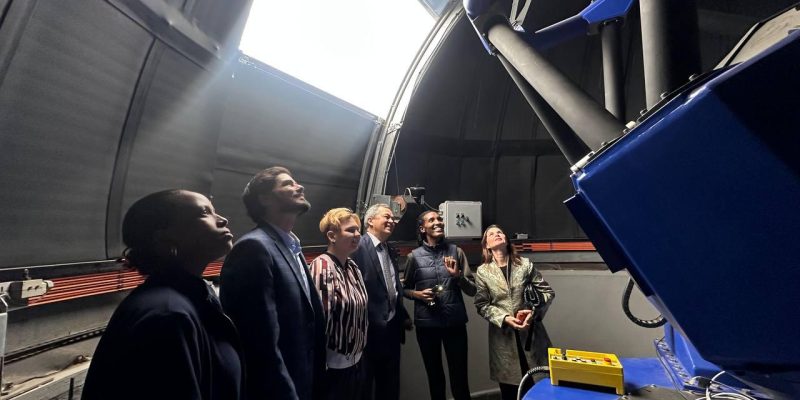

Space Diplomacy Takes Centre Stage as Global Experts Meet at UN Summit in Addis Ababa
International space experts, scientists and humanitarian organizations are exploring how space can strengthen education, healthcare, diplomacy and cooperation between nations.
Space is increasingly moving beyond scientific exploration to become a platform for international cooperation, education and humanitarian action, as experts from across the world gathered in Addis Ababa for the World Public Summit.
Held under the theme “Africa. New World: Africa in Shaping a Shared Future,” the summit featured an international panel titled “Space Without Borders: Uniting the World Through Education, Science and Humanitarian Partnership.”
The discussion brought together experts from Russia, Brazil, Spain, Tunisia, Uganda and Ethiopia to examine how space science can contribute to human development and strengthen partnerships across borders.
Space as a platform for global cooperation
The panel, moderated by Alena Kuzmenko, President of the Russian UNITY Charity Foundation, brought together professionals from the space, medical, scientific and education sectors.
Among the speakers was Oleg Skripochka, a Hero of the Russian Federation and Roscosmos cosmonaut who has spent more than 536 days in orbit across three missions and completed three spacewalks.
Skripochka highlighted the ability of space exploration to bring countries together around common scientific and humanitarian goals.
The discussions emphasized that international cooperation in space can extend beyond missions and technological development to include education, science communication, youth engagement, business and public diplomacy.
For Africa, this presents opportunities to strengthen local capacity in science, technology and innovation while creating partnerships with international institutions.
Africa’s growing role in space education
Education emerged as a key component of the discussions, with participants highlighting initiatives that encourage young people to pursue careers in space science.
African organizations including the African Space Leadership Institute (ASLI) and the Ethiopian Space Science Society (ESSS) were highlighted for their contribution to the continent’s growing space education ecosystem.
The panel also examined opportunities for technology transfer and greater participation by African countries in the global space sector.
Khalil Louati, founder and CEO of NOOR SPACE in Tunisia, highlighted international cooperation in space technology and pointed to projects involving Tunisian companies and Roscosmos.
The conversations underscore a broader opportunity for African countries to move from being consumers of space-enabled technologies to developing greater capabilities in research, education and innovation.
Space technology and healthcare
The role of space medicine in improving healthcare on Earth was another key focus of the summit.
Experts discussed how technologies developed for human spaceflight can contribute to areas including diagnostics, rehabilitation, telemedicine and other medical applications.
Raxana Batsmanova, a NASA nurse and UNITY Foundation Ambassador, emphasized the importance of keeping human wellbeing at the centre of technological advancement.
The discussion highlighted the potential for space-related research to generate practical benefits beyond the space sector, particularly in healthcare and medical innovation.
Bringing space to children facing cancer
The summit also moved from discussion to action through a humanitarian initiative targeting children undergoing cancer treatment in Ethiopia.
The UNITY Charity Foundation conducted its Space Art Therapy programme at Tikur Anbessa Specialized Hospital (TASH) in cooperation with the Tesfa Addis Parents and Childhood Cancer Organization (TAPCCO).
As part of the programme, children created drawings of their dreams alongside cosmonauts, astronauts and space professionals. Some of the artwork is subsequently incorporated into space missions, including on spacesuits, satellites and launch vehicles.
The initiative builds on the Foundation’s Art Rocket projects, which have taken artwork created by children with cancer into space.
Art Rocket II, launched on July 14, 2026, carried artwork created by young cancer patients from Russia and eight other countries on a Soyuz launch vehicle.
During the Addis Ababa workshop, Skripochka shared experiences from his space missions and encouraged the children to continue believing in their dreams.
Space Diplomacy Takes Centre Stage as Global Experts Meet at UN Summit in Addis Ababa
Building an international humanitarian network
The initiative forms part of a wider international programme that brings together space, medicine, art and philanthropy.
UNITY says its humanitarian space initiatives now involve participants from 18 countries, creating a network supporting children with cancer and their families.
The Foundation also operates the Space Art Therapy programme and Art Rocket projects, which it describes as humanitarian space missions designed to place the dreams of children with cancer on Soyuz launch vehicles. Art Rocket I launched in November 2025, followed by Art Rocket II in July 2026.
The projects demonstrate how space activities can be used as a tool for psychosocial support, international collaboration and public engagement.
Ethiopia strengthens its space connections
The visit also included engagements with Ethiopia’s space and research institutions.
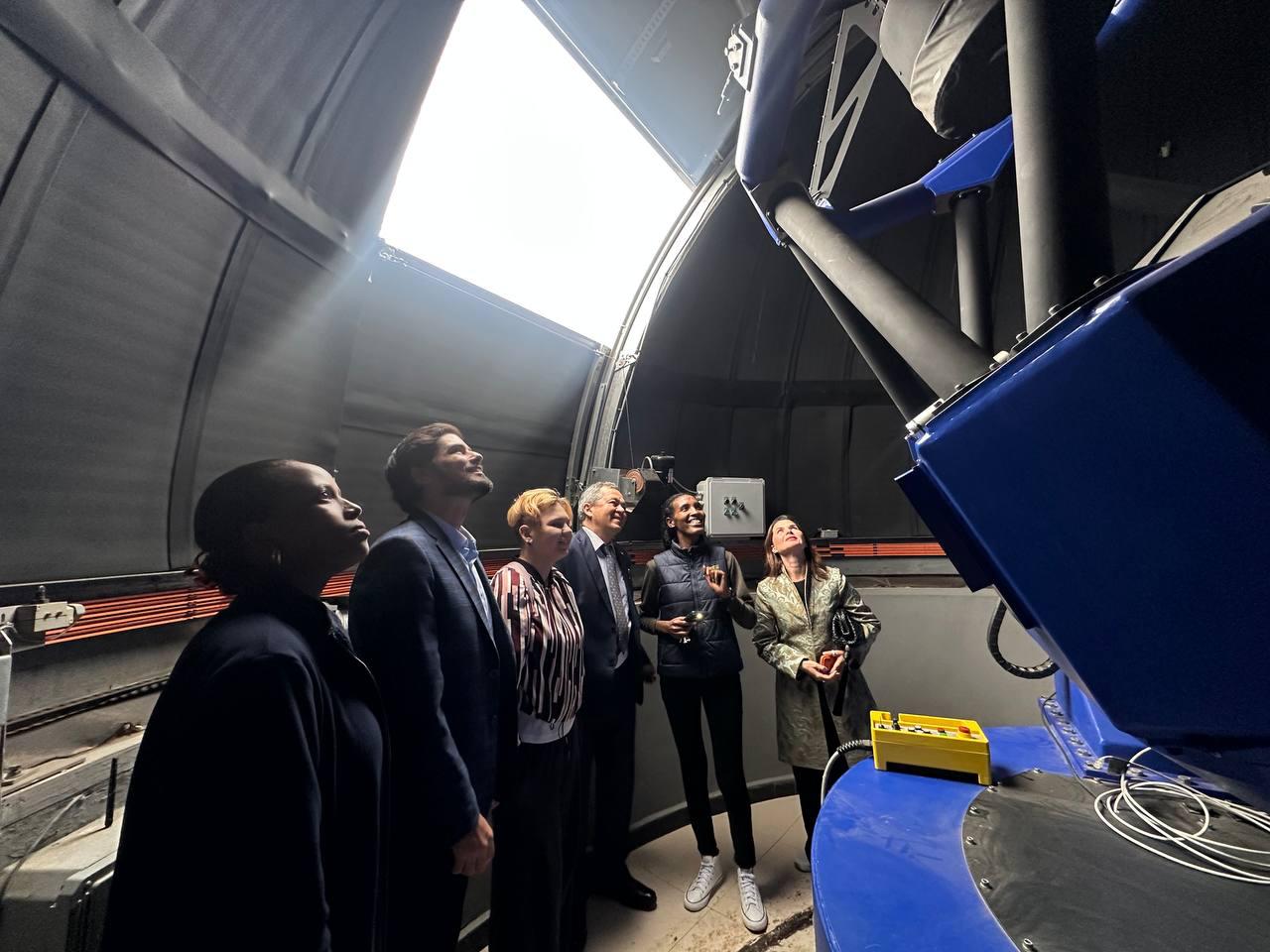
The delegation visited the Entoto Observatory and Research Center and the Space Science and Geospatial Institute (SSGI), where discussions focused on potential cooperation in science communication, education and humanitarian space initiatives.
The engagements point to the potential for stronger links between African research institutions and international space organizations, particularly in education, science outreach and technology development.
Looking ahead
The World Public Summit discussions come as African countries seek to strengthen their participation in the global space economy.
For the continent, space science has implications extending beyond rockets and satellites. It can support education, healthcare, climate and environmental monitoring, communications, agriculture and technological innovation.
The Addis Ababa discussions placed another dimension on that agenda: using space to build human connections and international partnerships.
UNITY Foundation and its partners have committed to expanding Space Art Therapy across Africa and developing additional humanitarian, educational and science outreach projects involving the international space community.
The recommendations from the panel will also form part of the official outcomes of the World Public Summit and are expected to be presented at the Second World Public Assembly, scheduled for Moscow on September 18–19, 2026.








Comments