
 By
By 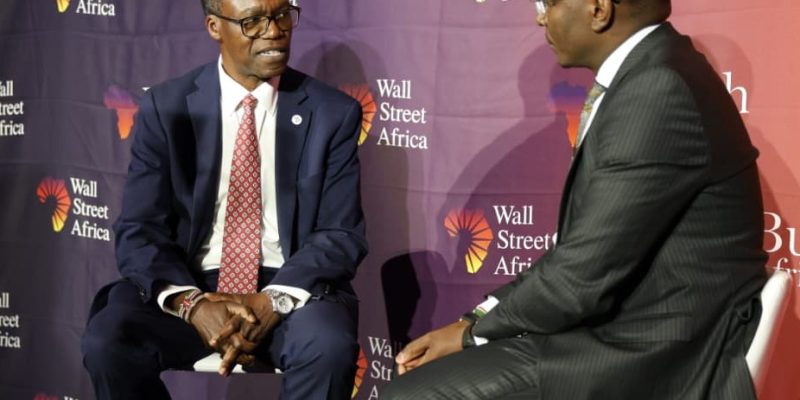

Gachora: Africa’s Biggest Capital Challenge Is Intermediation
NCBA Group MD John Gachora says Africa needs stronger financial systems to turn growing pools of global and domestic capital into real economic opportunities.
Africa is attracting more capital. However, much of that money still struggles to reach the businesses and projects that need it most.
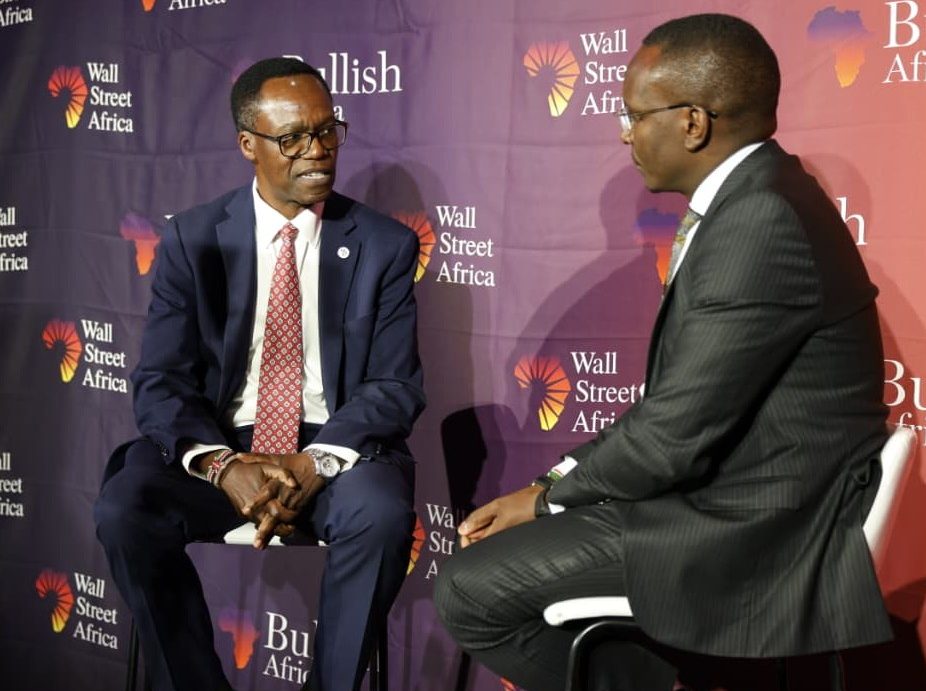
That was the message from NCBA Group Managing Director John Gachora during the Bullish Africa Summit in New York.
Gachora argued that global capital is no longer Africa’s biggest constraint. Instead, he pointed to the continent’s ability to intermediate capital and connect it with viable opportunities.
The summit took place on September 22 during the 81st United Nations General Assembly week. It brought together investors, policymakers and business leaders to discuss Africa’s investment opportunities.
Africa Has Capital. The Challenge Is Connecting It to Opportunity
Gachora opened his address by highlighting the scale of capital already flowing into Africa.
Foreign direct investment reached $70 billion in 2025, according to figures cited in his remarks. Private capital fundraising for Africa also more than doubled to $5.1 billion.
Venture funding stood at $3.9 billion across 506 deals. Meanwhile, diaspora remittances are on track to surpass $100 billion.
Mobile money also continues to demonstrate the depth of Africa’s financial ecosystem. The continent processed about $1.1 trillion across 81 billion mobile money transactions in 2024.
Yet significant financing gaps remain across infrastructure, climate finance, trade and MSMEs.
Gachora put the unmet annual demand across these areas at more than $700 billion.
“Africa’s unspoken opportunity is not a sector, a country or a commodity,” Gachora said. “It is the chance to finance the systems that let African businesses trade, manufacture, move goods, generate power and reach customers.”
Banks Sit Between Global Capital and Local Demand
The argument comes as Africa’s financial landscape continues to change.
Gachora pointed to growing participation from African investors, domestic pension funds and development finance institutions.
He also highlighted regional consolidation among financial institutions as evidence of a stronger African intermediation layer.
Examples include NCBA’s proposed 66% acquisition by Nedbank, KCB’s acquisition of Trust Merchant Bank in the Democratic Republic of Congo and Equity’s expansion in the DRC.
He also pointed to Absa’s acquisition of HSBC’s domestic wealth and business banking business in Mauritius.
Beyond banking, Gachora cited major transactions involving MTN, IHS Holding and the Dangote Refinery as signs of growing investment activity.
For him, the opportunity lies in strengthening the institutions that can translate these flows into financing for businesses and productive sectors.
Trade Needs Stronger Financial Intermediation
Trade offers another clear example of the gap.
Gachora noted that only 23% of Africa’s cross-border trade was intermediated by financial institutions between 2020 and 2024.
At the same time, intra-African trade has grown significantly. The African Development Bank reported that bank-intermediated intra-African trade increased by 89% above pre-pandemic levels during the same period.
Gachora summed up the challenge simply:
“Global capital speaks dollars and decades. African demand speaks shillings and months. Banks sit between the two.”
That role becomes increasingly important as businesses seek financing that matches the realities of local markets.
Gachora: Africa’s Biggest Capital Challenge Is Intermediation
Putting the Balance Sheet Behind Climate Finance
He also outlined areas where NCBA is deploying its balance sheet.
On sustainable finance, he pointed to a KSh3.5 billion green financing target for 2026.
The bank aims to build this into KSh30 billion in Group sustainable financing by 2030, aligned with the Kenya Green Finance Taxonomy.
“Africa does not need to choose between development and commercial capital,” he said. “The winning model blends them and blending is done on a bank’s balance sheet.”
The broader push comes as African financial institutions increasingly look at blended finance and risk-sharing to unlock investment. The African Development Bank has also highlighted co-financing and catalytic capital as important tools for scaling development investment.
SMEs Remain a Major Opportunity
Small and medium-sized businesses represent another significant financing gap.
He cited a $331 billion MSME financing gap and highlighted NCBA’s KSh18 billion in MSME lending.
Additionally, KSh819 billion in digital loans disbursed in the first half of 2026, representing 27% year-on-year growth.
“We are not competing for the ten-billion-dollar project,” he said. “We are structuring the ten-million-dollar SME deals that make it economically viable a much bigger prize.”
The focus reflects a wider challenge across Africa. Smaller businesses often struggle to access affordable and appropriately structured financing despite their role in employment and economic activity.
Financing the Creative Economy
Gachora also highlighted Kenya’s creative economy as an emerging financing opportunity.
The sector contributes about 5.3% of Kenya’s GDP, according to figures cited in his address, with a medium-term ambition of reaching 10%.
NCBA is responding through initiatives such as the Elev8 LIVE music accelerator and a 50:50 capital-match partnership with HEVA Fund.
The Start-Up facility provides up to KSh100,000 in zero-security, short-tenure financing at a 9% interest rate for early-stage creators.
The approach aims to help young creatives move from individual talent and ideas towards sustainable businesses.
Building the Intermediation Layer
His message ultimately went beyond NCBA.
He called on global investors to bring more than capital to Africa. He pointed to long-term financing, guarantees, co-investment, risk-sharing, sector expertise and technology as important parts of the equation.
Africa’s financing opportunity, therefore, is not simply about attracting more money.
It is about building the institutions, products and partnerships that can move capital from global markets into local businesses, infrastructure and communities.
As Gachora put it, investors should “invest in Africa by investing in the intermediation layer” the banks, managers and platforms that can turn capital commitments into local economic outcomes.


















Comments