
 By
By 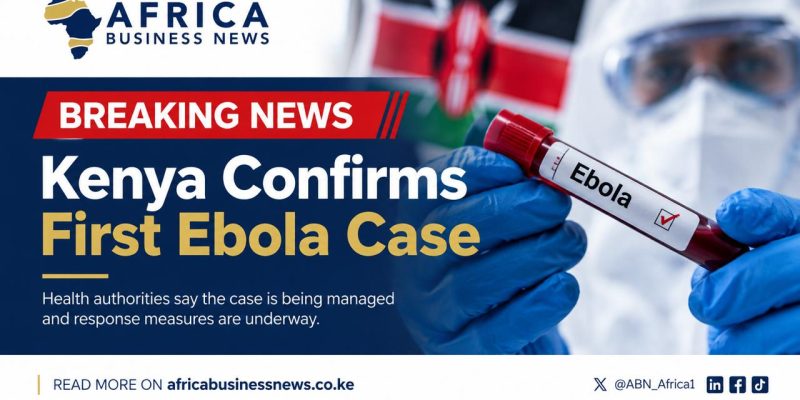

Kenya Confirms First-Ever Ebola Case
Health authorities have confirmed Kenya’s first Ebola case as the country steps up surveillance and preparedness measures.
Kenya has confirmed its first-ever case of Ebola, marking a major development in the country’s public health response to the disease.
Health Cabinet Secretary Aden Duale confirmed the case while addressing the media on Kenya’s Ebola preparedness in Nairobi on Tuesday.
The confirmation comes as health authorities strengthen measures to detect and respond to potential Ebola infections.
Kenya Steps Up Ebola Preparedness
The case places renewed focus on Kenya’s disease surveillance and emergency response systems.
Health authorities have been preparing for the possible spread of Ebola following outbreaks in parts of the region.
The current regional outbreak involves the Bundibugyo virus, a type of Ebola virus. The outbreak has affected the Democratic Republic of Congo and Uganda, with health authorities monitoring the risk of cross-border transmission.
Kenya’s position as a regional transport and trade hub makes disease surveillance particularly important.
First Confirmed Case
The confirmation by the Health Cabinet Secretary makes this Kenya’s first confirmed Ebola case.
Further details on the patient, including the location of the case and possible exposure, were not available in the KBC report used as the basis for this story.
Health authorities are expected to provide further information as investigations and contact tracing continue.
What Ebola Means for Public Health
Ebola is primarily transmitted through direct contact with the blood or other body fluids of an infected person after symptoms develop.
Early symptoms can include fever, fatigue, muscle pain and headache. Later symptoms may include vomiting, diarrhoea and, in some cases, unexplained bleeding.
Health workers remain at particular risk when infection prevention and control measures are not followed.
The confirmation therefore underscores the importance of early detection, isolation, testing and contact tracing.
Kenya’s Response
The latest development is expected to intensify surveillance at health facilities and points of entry as authorities work to contain any potential spread.
Kenya has previously strengthened its Ebola preparedness through surveillance, laboratory capacity and emergency response planning.
As authorities provide more information, the public will be urged to rely on official health guidance and avoid spreading unverified information.
The confirmation marks a significant moment for Kenya’s health system. The immediate priority will be identifying contacts, containing transmission and protecting healthcare workers and communities.















Comments