
 By
By 

Pochi la Biashara Powers Women-Led Businesses
Mobile Money Reshapes Kenya’s Informal Economy
GSMA study finds Safaricom’s merchant wallet is boosting savings, increasing sales and expanding financial inclusion among women-owned micro businesses.
Kenya’s informal economy is undergoing a digital transformation, with mobile money increasingly empowering women micro-entrepreneurs to grow their businesses, improve financial management and access formal financial services.
A new report by the GSMA Connected Women Programme, funded by the Gates Foundation and conducted in collaboration with IDinsight and YUX, highlights how Safaricom’s Pochi la Biashara is helping address long-standing barriers that have limited women’s participation in digital financial services.
The findings come at a time when women continue to play a dominant role in Kenya’s micro and small enterprise sector. According to the Ministry of Investments, Trade and Industry, micro and small enterprises support approximately 15 million jobs and account for 85% of non-farm employment. Nearly 74.4% of working women in Kenya are self-employed, compared to 57.4% of working men.
Closing the Digital Finance Gap
Despite their strong presence in business, many women entrepreneurs continue to face challenges ranging from limited access to finance and digital tools to fraud and concerns over privacy.
The report notes that previous research found only 46% of women micro-entrepreneurs used mobile money for business transactions, compared with 62% of men.
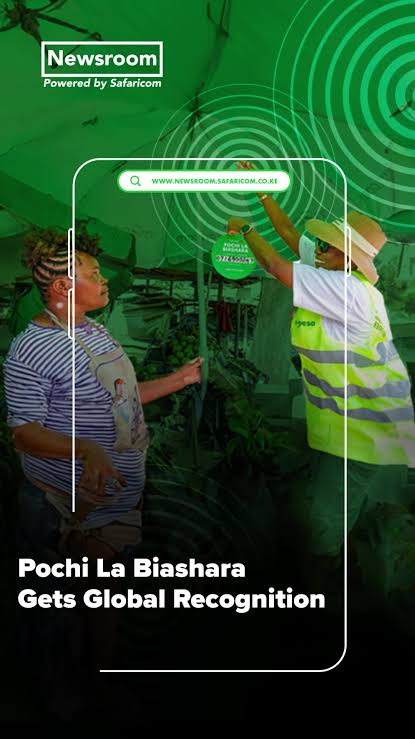
Safaricom designed Pochi la Biashara to respond to those challenges. The merchant wallet enables traders to receive business payments through their personal SIM cards while keeping business and personal finances separate.
The platform also protects merchants from common mobile money reversal scams by making payments non-reversible once completed. In addition, it conceals users’ personal phone numbers during transactions, helping reduce unwanted contact and harassment.
Pochi la Biashara Powers Women-Led Businesses
Women Report Higher Savings and Business Growth
The study tracked nearly 2,000 women micro-entrepreneurs across Nairobi, Murang’a and Kajiado counties over several years.
Researchers found that 35.6% of new users reported higher savings after adopting Pochi la Biashara. Another 30.3% said they experienced increased daily sales because they could serve more customers who preferred cashless payments.
The report also found that 24.2% of users recorded higher incomes, enabling many to purchase additional stock and invest in new business assets.
Beyond improving daily operations, digital transaction records have also helped many women build financial histories that support better business planning.
Safaricom has further strengthened the platform through its Taasi loan facility, which allows eligible merchants to access working capital using their transaction history.
Business Growth Drives Financial Inclusion
The report concludes that designing financial products around women’s needs can deliver both social and commercial value.
Safaricom recorded strong growth in Pochi la Biashara during the study period. Active accounts increased by 72.6% year-on-year to approximately 1.5 million during the first half of 2026.
Revenue generated by the platform rose 95% year-on-year to KES 1.68 billion in the six months ending September 2025.
Women have also become the largest user segment. Between late 2024 and late 2025, the number of active female merchants grew by 92%, outpacing the 78% growth recorded among men.
By December 2025, women accounted for 52% of all active Pochi la Biashara users, representing more than 900,000 merchants.
Lessons for Africa’s Digital Finance Sector
The GSMA report recommends that digital financial service providers strengthen face-to-face customer engagement, particularly in informal markets where trust remains critical.
According to the study, more than 60% of women joined Pochi la Biashara after interacting with Safaricom field agents, while nearly half first heard about the service through friends and family.
Researchers also found that although smartphone ownership continues to rise, many traders still prefer using USSD services because they consume less data and work reliably in low-connectivity environments.
The report concludes that products designed around the realities of women entrepreneurs can accelerate financial inclusion while unlocking significant economic growth across Africa’s informal economy.













Comments