
 By
By 
Kenyan Women On The Move To Foreign Land… But Why?
Kenya has a population of 47.6 million people; 49.5% male and 50.5% female. Unemployment rate is at 7.4% with about 85 per cent of the unemployed below 35 years. This is according to Kenya National Bureau of statistics 2019.
Unemployment and underemployment remain major development challenge in the country mainly due to rapid population growth, low economic growth as well as the structural rigidities within the labor market. Because of these and many other challenges, Kenyans are increasingly seeking employment opportunities beyond the borders; Women seem to take the lead.
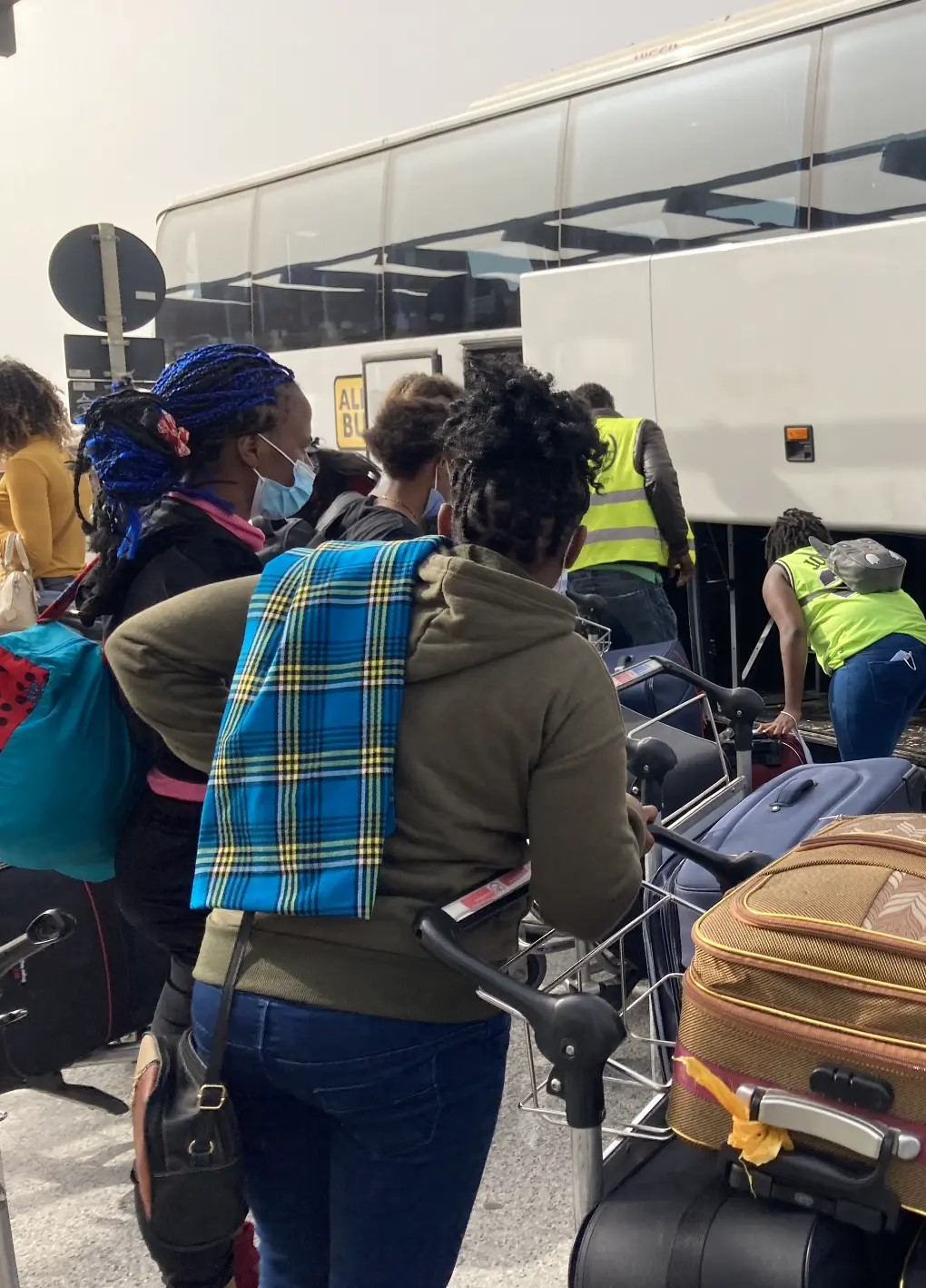
Photo courtesy IOM during international migrants day.
In 2007 the Government of Kenya started regulating Labor Migration upon realizing the importance of how it can contribute to development and nation building through easing pressures of unemployment, skills transfers acquired abroad and remittances.
As such, the Ministry of Labour approached the International Organization for Migration for technical assistance in enhancing its capacities to regulate Labour Migration.
At the onset, the program aimed to contribute to the development of a coherent and holistic labour migration policy as well as to improve linkages with the diaspora.
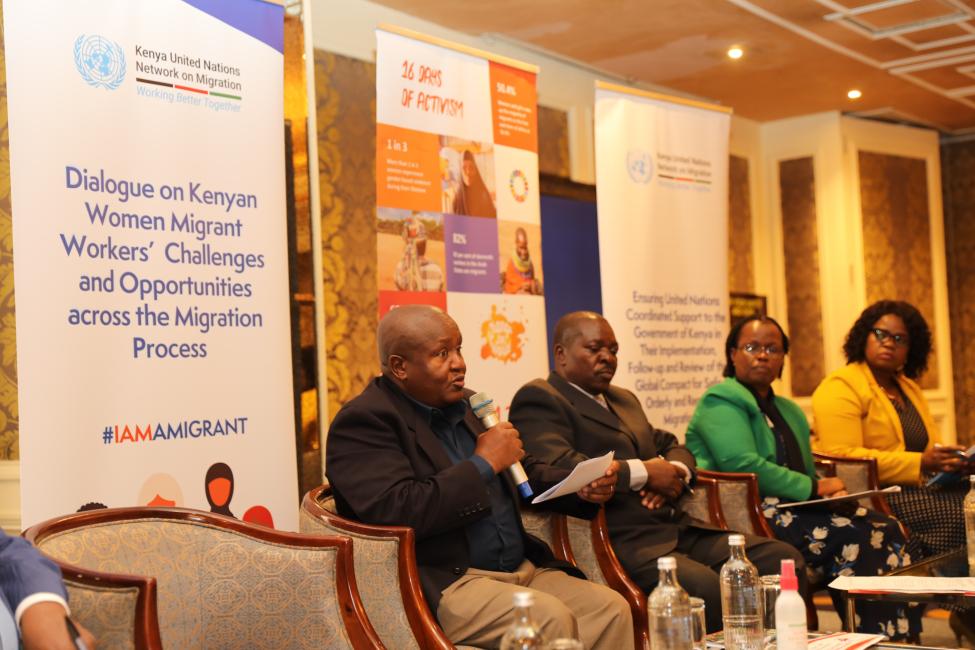
Photo courtesy IOM during international migrants day.
According to the 2017 report by International Labour Organization -ILOSTAT, out of 164 million migrant workers,42% were women. The high levels of unemployment, socio-economic and environmental conditions within the country are the key push factors for migration.
The pull factors include the opportunities for a better life which include higher salaries, better quality of education and health care in the countries of destination.
According to the report given by International Organization for migration, there are 29,448 Kenyan migrant workers who have been cleared to work in Saudi Arabia as homecare managers between March 2019 and January 2022.
According to the report, Kenyans are present in most regions of the world, including Asia, the Middle East, Latin America and the Caribbean, and Oceania. Lately, there is an increasing number of Kenyan professionals migrating to UK, USA, Canada and Australia.
For many women, migration can be a positive experience leading to a better life and livelihood, empowerment, access to education and careers that might not be available in their countries of origin as well as intermarriages.
However, despite all the opportunities, there are many challenges especially when migration is inadequately monitored and managed. For instance, migration exposes women and girls to serious violations of their human rights and discrimination at all stages of the migration process. In some countries, Female migrants are also at a disadvantage in terms of the quality of the jobs they obtain.
In a large majority of countries, women are more likely to be engaged in elementary occupations than male migrants. This includes domestic work, cleaning and related menial services, especially in high-income countries.
In USA and Canada respectively 24 per cent and 34 per cent of female migrant workers were employed as cleaners, nannies or care givers in 2020.
During last year’s International Migrants Day (IMD), which falls on 18 December each year, IOM the International Organization for Migration/UN Migration, in Kenya, brought together government and non-government organizations and entities from a variety of sectors to discuss the rights of Kenyan women migrant workers, and the challenges and vulnerabilities they face while migrating within the region and outside the East and Horn of Africa.
Photo courtesy IOM during international migrants day.
During the event, IOM’s Chief of Mission to Kenya, Sharon Dimanche said, “While nearly half of migrants worldwide are women, a figure that might suggest an acceptable gender balance in terms of global flows, it does not provide adequate insight into the underlying social constraints nor of the significant qualitative differences that characterize the migration of women.”
Participants highlighted the need to strengthen accountability both at the countries of destination and origin to enhance protection measures toward migrants’ workers.



















Comments