
 By
By 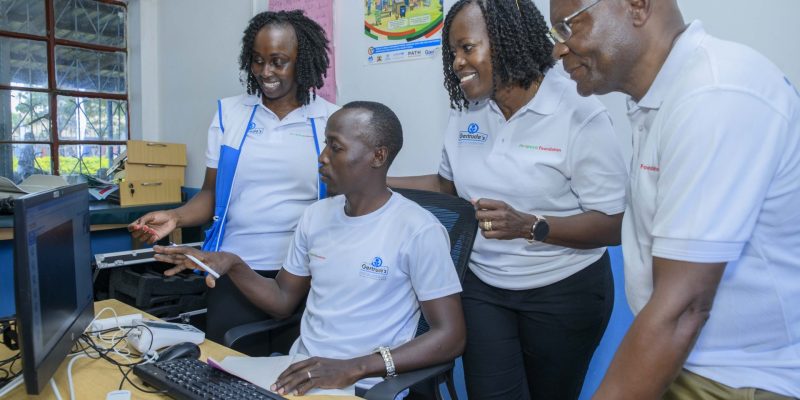

Daktari Smart Expands Specialist Care to 50,000 Children Across 10 Counties
The telemedicine programme is moving beyond digital consultations to strengthen healthcare workers, referral systems and county-led care.
For a family living far from a specialist hospital, accessing paediatric care can mean long journeys, high transport costs and delays.
Daktari Smart is helping change that by bringing specialist paediatric expertise closer to underserved communities through telemedicine.
The programme, run by Gertrude’s Hospital Foundation and the M-PESA Foundation, is now entering its second phase. It aims to reach more than 50,000 children across 10 counties by August 2027.
The programme will also train 800 healthcare workers and 1,150 community health promoters. Its first phase has reached more than 27,000 children across Samburu, Homa Bay, Baringo, Narok and Lamu counties.
Beyond Technology, Building Stronger Health Systems
The second phase carries the theme “Daktari Smart: Beyond Technology.”
The focus reflects a shift from simply connecting patients to specialists. It also looks at the people, systems and partnerships needed to sustain specialist care.
During a programme review in Lamu County from September 23–24, 2026, partners and county stakeholders assessed implementation, utilisation and integration into local health systems.
Dr Carol Waweru, Head of Impact Programmes at Gertrude’s Hospital Foundation, said the programme goes beyond technology.
“The value of Daktari Smart goes beyond technology and into putting specialist knowledge within reach of children and families who may otherwise face long journeys, delays and additional costs to access care,” she said.
“As we move into the next phase, our focus is on strengthening the systems around telemedicine so that this access can be sustained.”
Daktari Smart Expands Specialist Care to 50,000 Children Across 10 Counties
Investing in Healthcare Workers
The programme is also building specialist skills within local health facilities.
In Lamu, Gertrude’s Hospital Foundation has sponsored two nurses for specialised Paediatric Nurse Training.
One nurse is based at Mpeketoni Sub-County Hospital, while the other works at Lamu County Referral Hospital, also known as King Fahad Hospital.
The wider programme has trained 205 nurses across Kenya. The next phase will introduce specialised paediatric oncology nursing.
This approach means communities can benefit from both remote specialist expertise and stronger local healthcare capacity.
From Virtual Consultation to Treatment
Daktari Smart has recorded more than 8,000 telemedicine sessions in 2026.
However, the programme does not stop at online consultations.
Children identified through the platform have gone on to receive free treatment at Gertrude’s Children’s Hospital. Cases have included cleft lip and palate, heart surgery and management of Systemic Lupus Erythematosus (SLE).
This creates a referral pathway that links level 3 and 4 health facilities with specialist diagnosis and definitive treatment.
Dr Robert Nyarango, Gertrude’s Children’s Hospital CEO and Gertrude’s Hospital Foundation Trustee, said effective referrals remain critical.
“An effective referral system is critical to ensuring children receive the right care at the right time,” he said.
Through Daktari Smart, children can access specialist paediatric expertise from Gertrude’s hospital in Muthaiga without unnecessary delays.
Taking Specialist Care to More Counties
Phase Two will expand the programme to Turkana, Kwale, Vihiga, Laikipia and Makueni.
Service inception is planned from October 2026.
The expansion will also strengthen community-level training in Lamu. Facilities including Hindi Health Centre, Siyu Dispensary, Witu Sub-County Hospital and Mpeketoni Sub-County Hospital will support the wider capacity-building effort.
Healthcare workers and community health promoters will receive training to identify, refer and support children who require specialist care.
Vihiga has already been onboarded into the second phase, with the county describing telemedicine as a potential way to address limited access to specialists.
Technology That Brings Care Closer
Daktari Smart connects healthcare workers in participating facilities with specialists at Gertrude’s Children’s Hospital through real-time consultations.
The technology includes an electronic stethoscope, vital signs monitor, high-resolution camera, ultrasound, otoscope and ECG.
These tools allow specialists to assess patients remotely while local healthcare workers remain with the child.
The programme has used this model since its launch in 2021. Its original design aimed to improve access to specialist care in hard-to-reach counties while strengthening the capacity of local health workers.
Data from the programme is also helping partners understand health-seeking behaviour, patient experiences, waiting times and transport barriers.
That information can help counties identify gaps and plan how telemedicine can become part of routine healthcare.
Building a Sustainable Model
Joseph Ogutu, Trustee, Safaricom Foundation, said the next phase will build on lessons from the programme.
“Through our partnership with Gertrude’s Children’s Hospital, we have seen how technology can help address some of the barriers children and families face in accessing specialist healthcare,” he said.
Celestine Munda, Trustee, M-PESA Foundation, added that the partnership is about making specialist care more accessible regardless of where children live.
The programme’s next chapter therefore puts people alongside technology.
By combining specialist consultations, skilled healthcare workers, stronger referral pathways and county ownership, Daktari Smart is seeking to make specialist paediatric care more accessible and sustainable across underserved communities.










Comments