

Kenya’s Milling Industry Faces a Bigger Test in Food Safety and Quality
Food safety does not begin when a packet of flour reaches a supermarket shelf. It starts much earlier, with the quality of the raw materials, how they are handled and the standards followed during processing.
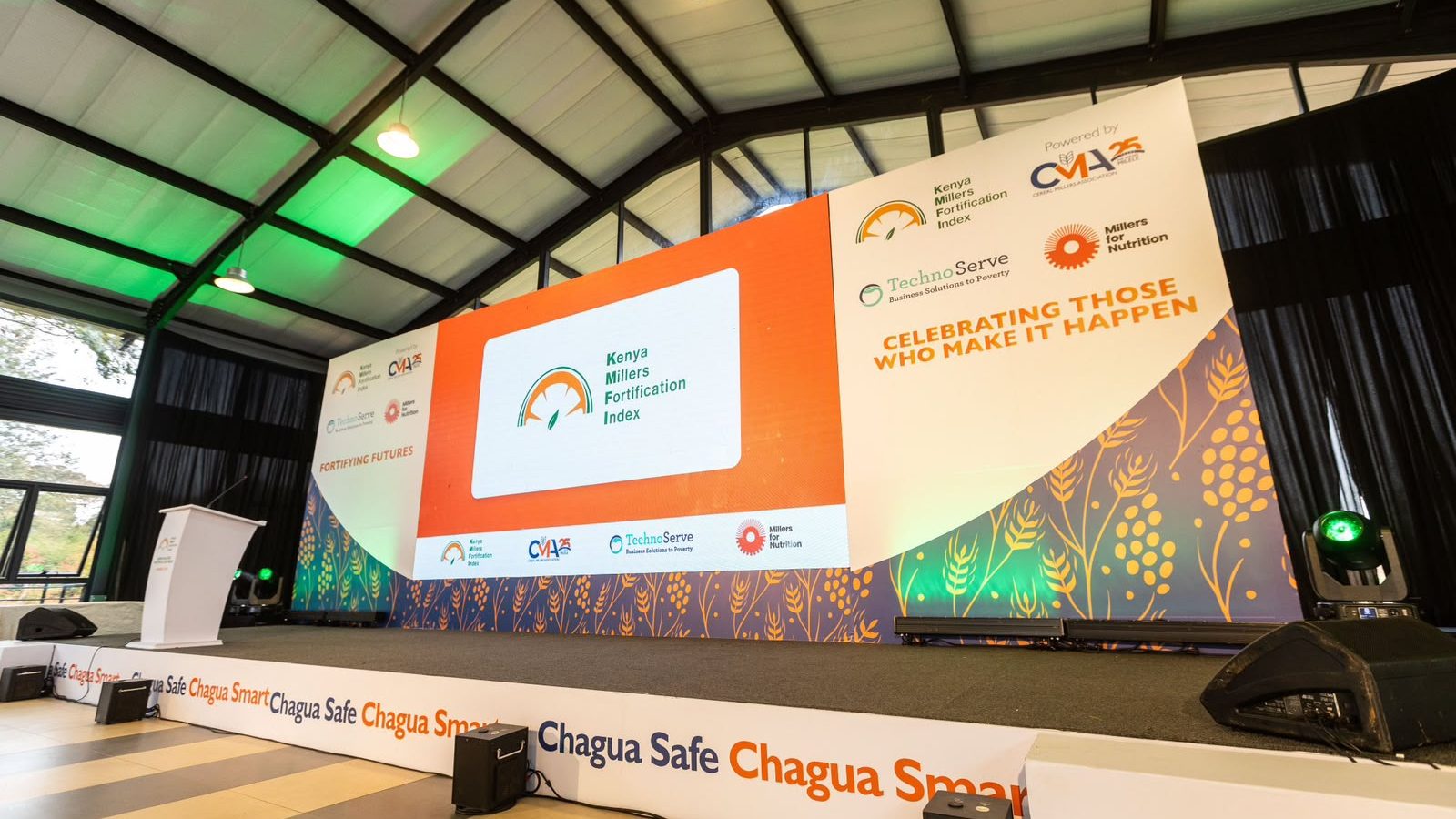
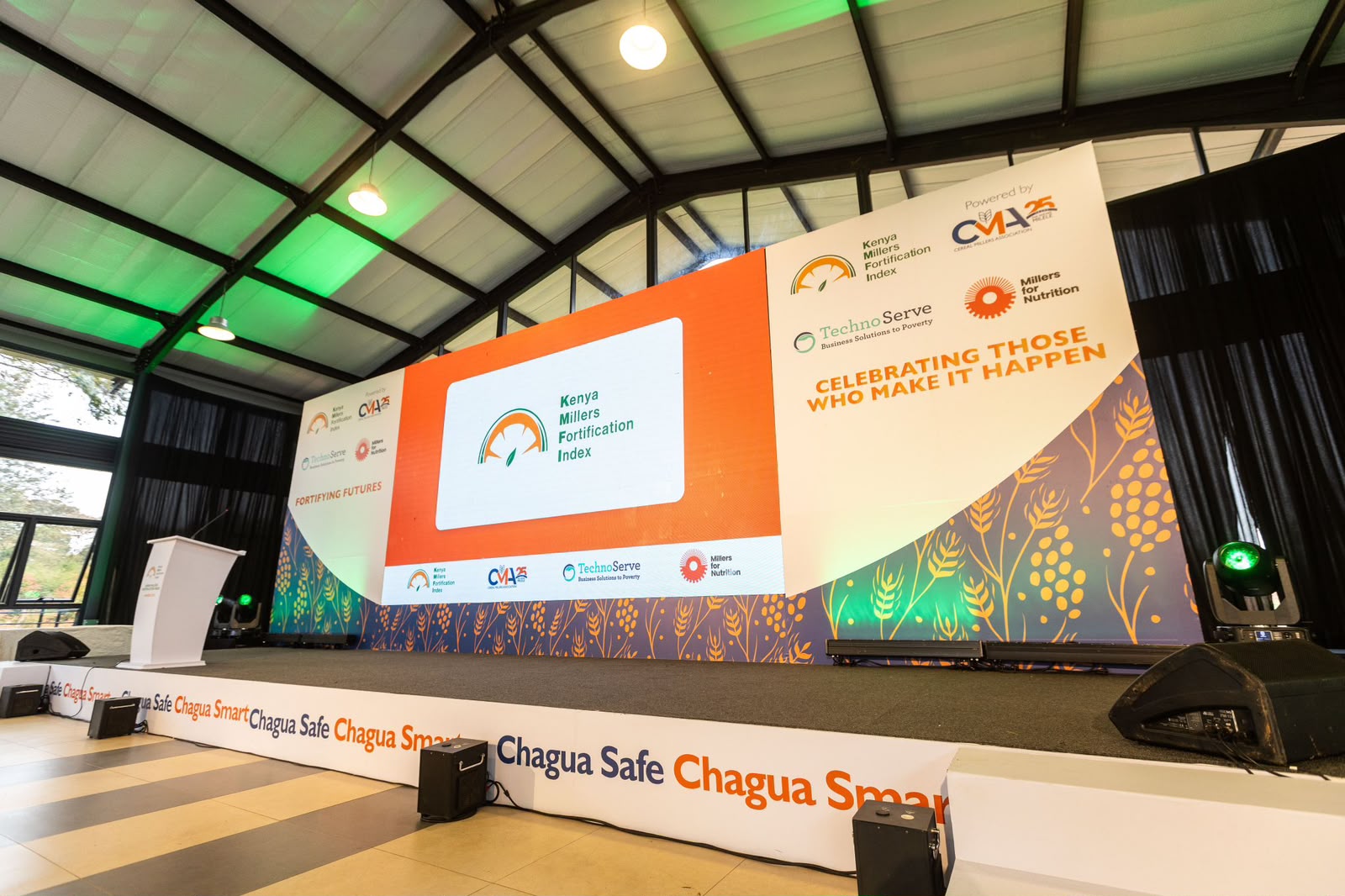
This was a key message from Beju Shah, Chairman of the Cereal Millers Association (CMA), during the third annual Kenya Millers Fortification Index (KMFI) Awards in Thika. He said responsibility for safe food runs through the entire value chain, from the farm and mill to the retail shelf and, ultimately, the consumer’s home.
For Kenya’s milling industry, however, maintaining these standards comes with several challenges. These include aflatoxin contamination, the cost of fortification, uneven compliance and the difficulty of reaching consumers who rely on informal milling.
Aflatoxin Control Starts with the Raw Materials
Aflatoxin remains a concern in parts of Kenya, particularly in maize. The toxins are produced by certain moulds that can grow on crops under favourable conditions. This makes proper handling, storage and testing of raw materials important in protecting consumers.
Shah said millers must take responsibility for the quality of the products they release into the market. He pointed to the CMA’s “Chagua Safe, Chagua Smart” initiative, which encourages consumers to choose products that meet safety standards.
He also explained that accountability must go beyond displaying a quality mark. CMA conducts its own checks and expects its members to maintain the required standards.
This means that food safety cannot depend on a single inspection or certification. Instead, companies must maintain consistent controls throughout production.
The Cost of Compliance and the Need for Fair Competition
Food safety and nutrition standards also have a financial cost for manufacturers. For millers, fortification requires investment in equipment, nutrients, quality control and compliance processes.
Rizwan Yusufali, Programme Director of Millers for Nutrition at TechnoServe, said companies must balance these costs with the need to keep products affordable for consumers.
However, the challenge becomes greater when some manufacturers comply with fortification requirements while others do not. Companies that invest in fortification may face higher production costs, while those that avoid the expense could gain a price advantage.
Yusufali said consistent enforcement is therefore important. All manufacturers should operate under the same requirements to ensure that responsible companies are not disadvantaged.
Shah raised a similar concern about the structure of the maize milling market. He said CMA members account for about 40 per cent of the market, while other millers account for the remaining 60 per cent.
This makes wider industry participation essential. Standards cannot achieve their intended impact if a significant share of the market remains outside effective compliance and monitoring systems.
Informal Milling Remains a Difficult Gap to Close
Reaching smaller and informal millers is another challenge facing the sector.
Yusufali said about half of the maize flour consumed by households comes from commercial mills and packaged products. While compliance in this segment has been improving, informal milling remains harder to regulate and supportali.
The challenge is not simply about requiring smaller operators to meet standards. They may also need access to the right equipment, technical support and resources to make compliance possible.
Yusufali pointed to organizations such as Sanku, which support small-scale mills in improving fortification practices.
He also noted that progress differs across food sectors. Wheat milling is more consolidated, with CMA members accounting for more than 85 per cent of the market. Fortification is already well established in this segment.
The edible oil sector has also made progress, with some companies adopting fortification before it became mandatory. Kenya’s experience with salt iodization provides another example of how sustained industry and regulatory efforts can improve compliance.
These differences show why approaches to food safety and fortification must consider the structure of each sector.
Industry Recognition Must Translate into Better Standards
The KMFI Awards seek to encourage food processors to take greater ownership of product quality and nutrition standards.
Shah said the initiative began with five companies. Participation has since grown to 35 companies and more than 150 brands, according to his remarks at the awards.
He said the ambition is to bring every miller in Kenya into the initiative, including companies that are not members of the CMA.
For Shah, recognition can motivate manufacturers to improve their processes. However, the wider goal is to raise standards across the industry and eventually strengthen food processing practices beyond Kenya.
That ambition will require more than celebrating companies that already meet certain standards. It will also require reaching manufacturers that have yet to participate and supporting them to improve.
Innovation Must Respond to Changing Consumer Needs
Beyond compliance, Shah challenged the industry to think about new products that respond to consumer needs.
He raised the possibility of developing a standalone ugali product, while acknowledging that changing established consumer habits is not easy.
He said millers have access to technology partners and universities that can support product development. Collaboration could help the industry explore new approaches to familiar foods.
Such innovation would need to consider affordability, convenience and consumer acceptance. A product may be technically possible, but its success will depend on whether households are willing and able to adopt it.
Building Standards Across the Entire Market
The discussions at the KMFI Awards highlighted a central challenge for Kenya’s food processing industry: improving food safety and nutrition requires action across the entire market.
Millers must maintain quality controls, invest in fortification and develop products that meet consumer needs. At the same time, regulators must enforce standards consistently, while smaller manufacturers need support to comply.
As Shah observed, responsibility begins with the raw materials and continues until food reaches the consumer. The task ahead is to make that responsibility a shared industry standard, rather than an achievement limited to a section of the market.
More related reads can be read here