
 By
By Mobile Money in Africa Shifts from Transactions to Transformation
By [Group CFO, Safaricom PLC]
Africa’s mobile money journey has moved beyond simple transactions. Today, it shapes economies and transforms lives. In 2024, the continent led the world in mobile money growth, with most of the 2.1 billion registered accounts found here.
Sub-Saharan Africa alone accounts for more than 1.1 billion, according to GSMA’s State of the Industry Report for Mobile Money.
Unmatched Growth and Economic Impact
Africa is now the global hub of mobile money, driving innovation and inclusion. In just one year, Sub-Saharan Africa saw a 19% increase in registered accounts and a 12% rise in active users.
This vibrant system enabled over 108 billion transactions worth $1.68 trillion globallyclear proof that mobile money is deeply embedded in daily life.
But mobile money’s influence goes deeper. In 2023, it contributed about $190 billion to Sub-Saharan Africa’s GDP, or 4.5% of the region’s economy. It now powers development and fuels thriving digital ecosystems.

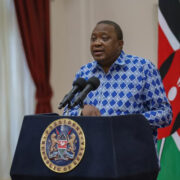
Mobile Money in Africa Shifts from Transactions to Transformation. Photo Courtesy
From Access to Empowerment
This shift marks a new chapter from access to empowerment. Kenya and Ethiopia show what this evolution looks like. In Kenya, M-PESA has grown far beyond money transfers.
Eighteen years after launch, it supports savings, loans, insurance, and business payments. In 2024 alone, Kenyans transacted KSh38 trillion via M-PESA. It now generates 44% of Safaricom’s annual revenue.
Ethiopia, though newer to mobile money, is catching up fast. Policy changes and services like Telebirr and M-PESA Ethiopia have boosted uptake.
Farmers now use mobile money to access loans, insurance, and farm inputs improving their resilience and productivity.
Looking ahead, partnerships between telecoms, banks, and tech innovators will be key. The World Bank urges more focus on digital literacy especially for women to close usage gaps and promote fairness.
Governments are also digitizing services, reducing time spent in queues for IDs, passports, or parking. Combined with cheaper smartphones and better internet, these shifts are accelerating digital adoption.
In conclusion, mobile money is no longer just a way to send cash. It has become a pillar of Africa’s digital and economic future.
https://africabusinessnews.co.ke/how-m-pesa-go-builds-money-skills-for-teens/
















Comments