

Kenyan business leaders are calling for stronger workplace policies, better childcare support and clearer leadership pathways to help women thrive at work.
Businesses in Kenya are being urged to strengthen workplace inclusion by improving employee safety, supporting working parents and creating more opportunities for women to advance into leadership.
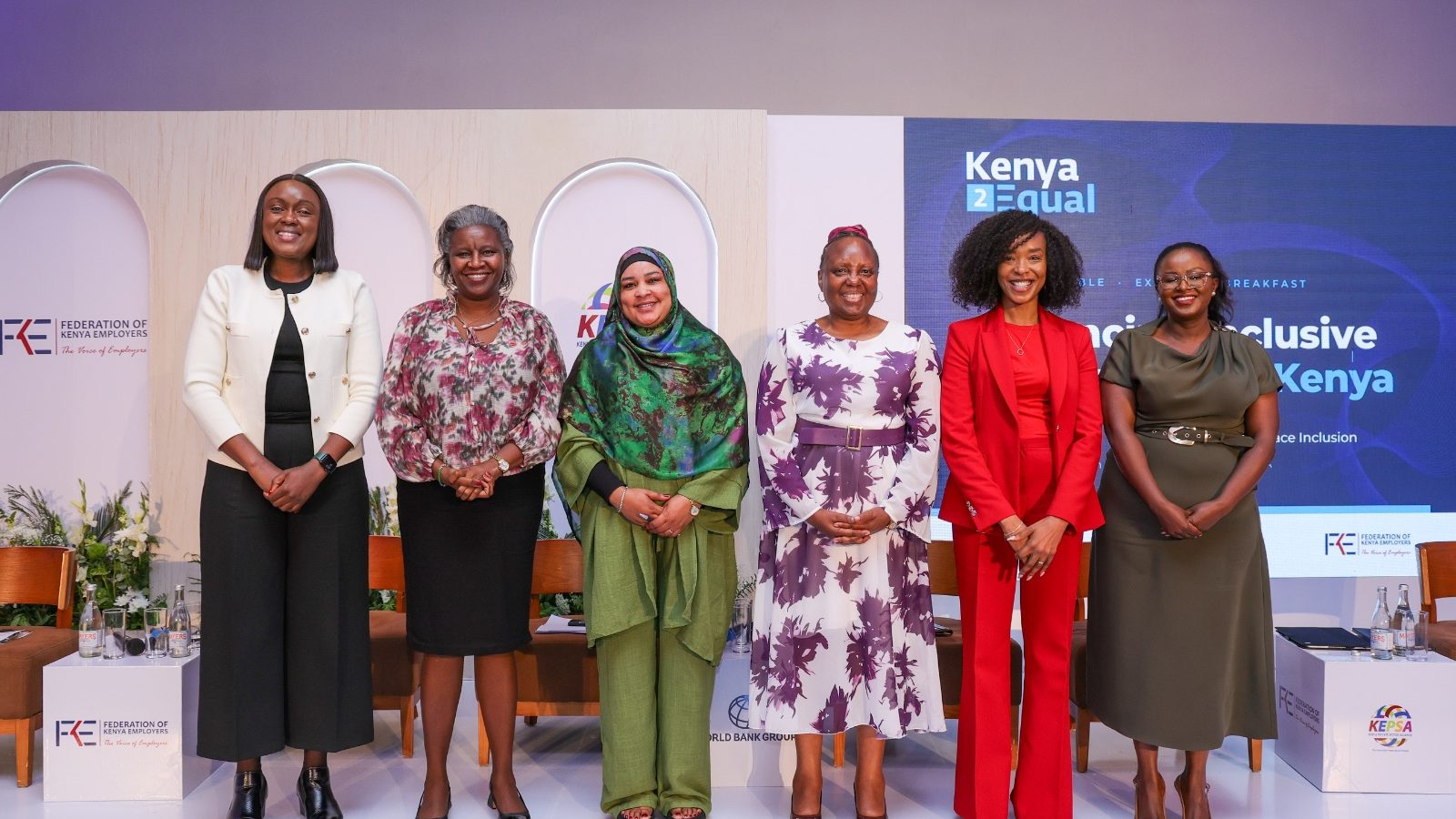
The call came during a CEO Roundtable on Advancing Inclusive Workplaces held in Nairobi. The World Bank Group, Federation of Kenya Employers (FKE) and Kenya Private Sector Alliance (KEPSA) convened the meeting to identify practical actions companies can take to attract, retain and advance women.
The discussions came against the backdrop of the financial cost of workplace gender-based violence and harassment (GBVH). A 2025 study by the International Finance Corporation (IFC) estimates that these challenges cost Kenya’s private sector Sh95.5 billion annually.
According to the study, which covered 26 companies, GBVH accounts for an estimated Sh67 billion in lost productivity and Sh28.5 billion in human resource expenses each year. It also found that 33.2 per cent of employees had experienced GBVH, while 86 per cent of incidents went unreported.
Affected employees lost an average of 24.3 working days annually.
Making Workplace Inclusion a Business Priority
Opening the roundtable, Gillian Rogers, IFC’s Principal Country Officer for Kenya, linked workplace inclusion to talent development and the country’s competitiveness.
“Together, we can build workplaces where women enter, stay, progress, and lead; where companies can draw on the full strength of their talent; and where inclusion translates into stronger people, stronger businesses, and a more competitive Kenyan economy,” said Rogers.
Business leaders explored practical ways to improve women’s retention and career progression. They also discussed leadership opportunities, childcare solutions, workplace safety and executive accountability.
The discussions highlighted how childcare responsibilities, flexible working arrangements and gender pay gaps can affect women’s career progression.
Women in sub-Saharan Africa perform two to three times more unpaid care work than men. This can limit their ability to pursue career opportunities and advance professionally.
IFC evidence also shows that employer-supported childcare can reduce absenteeism and improve employee productivity.
Jacqueline Mugo, EBS, Executive Director and CEO of FKE, said employers must create safe and supportive environments for their workers.
“Employers have a responsibility to create workplaces where employees feel safe, are treated fairly and have opportunities to grow. When businesses lose experienced workers because of harassment, unfair practices or inadequate support, they also lose valuable skills and productivity,” said Mugo.
Closing the Gap in Women’s Leadership
The roundtable also examined the limited representation of women in senior corporate positions.
Women account for approximately 40 per cent of entry-level private sector roles in Kenya. However, their representation falls to 28 per cent in C-suite positions and 14 per cent among CEOs.
Carole Kariuki, Chief Executive Officer of KEPSA, called on business leaders to take greater responsibility for addressing the barriers to women’s advancement.
“Businesses are investing in developing talented women, but too few are progressing into senior leadership. We need CEOs to take greater responsibility for removing these barriers, strengthening promotion pathways and ensuring that gender equality becomes part of how businesses measure performance and growth,” said Kariuki.
Evidence presented during the discussions also showed that companies with gender-diverse executive teams are 25 per cent more likely to outperform financially. Diverse management teams are also associated with 19 per cent higher innovation revenue.
Strengthening Accountability Through Workplace Standards
The World Bank Group called on Kenyan companies to adopt EDGE certification, an internationally recognised standard for assessing gender equality in the workplace.
The certification assesses areas such as pay equity, leadership representation and career progression. It can help companies track their performance and strengthen accountability for workplace inclusion.
The discussions underscored the need for businesses to move beyond commitments and adopt practical measures that support women throughout their careers.
These include preventing harassment, improving access to childcare, promoting fair career opportunities and ensuring that women can progress into leadership.